
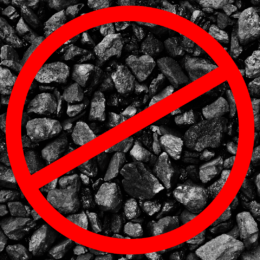
In 2024, global demand for coal, often called “the world’s dirtiest fossil fuel”, reached a record high, consumption hitting approximately 8.8 billion tons.
Despite the 2015 Paris Climate Agreement, a legally binding international treaty aimed at limiting global warming to well below 2°C, and ideally 1.5°C, coal emissions continue to rise as part of the world’s stubborn reliance on fossil fuels. To have any chance of meeting the 1.5°C target, global greenhouse gas emissions need to peak before 2025 at the latest, and then decline by 43% by 2030. The catch? We are already in 2025. The clock is ticking.
One of the governments still pursuing coal, despite its environmental impacts, is the United States. On September 29th, 2025, the U.S. government revealed a plan to revive the mining of coal in the United States.
The U.S. Department of the Interior said it would open up 13.1 million acres of federal land for coal mining and lower royalty rates for companies needed to pay to extract coal. Meanwhile, the U.S. Department of Energy said it would invest $625 million to upgrade and expand the American coal industry.
These coordinated actions reflect a significant federal push to reinvigorate coal, despite environmental concerns and the ongoing global shift toward cleaner energy sources. The pursuit of coal is a giant step backwards in the fight against climate change, but there is still time to switch to clean energy alternatives.
Coal is Old
According to the US Energy Information Administration, coal production peaked in the United States in 2008 and has declined in output ever since. Output of coal is estimated to decline even further globally in 2026.
According to Global Energy Monitor, there are currently 2,457 coal-fired power plants worldwide, including both operating and mothballed units. To keep global warming below 1.5°C, as targeted by the Paris Climate Agreement, all these plants need to be retired by 2030 in wealthy countries and to meet the Paris Climate Agreement, the equivalent of about two coal plants must be retired per week by 2040.
Coal alone was responsible for approximately 15.4 billion tons of CO2 emissions in 2023, consistently producing more CO2 than any other fossil fuel annually. Despite this, only 12% of coal-fired power plants have been shut down, 11% require accelerated closure plans, and a staggering 77% have no scheduled phaseout or retirement commitment.
Coal is a finite resource with an estimated 134 years left until existing coal mines are considered depleted and when current consumption rates are factored in. Known oil reserves have approximately 51 years left to pump oil on present consumption levels.
But recent reports indicate that globally, there are over 850 new coal mine plans, expansions, and extensions in various stages of development, particularly concentrated in Asia-Pacific regions like China, India, and Australia. These new projects could add significant capacity to coal production, potentially extending the timeline of coal availability beyond current estimates.
So while coal is finite, exploration and new discoveries coupled with expanding mining capacity suggest more coal could still be accessible than previously counted.
Coal is Dirty
During the industrial revolution, coal soot filled the skies of industrial cities, lowering the life expectancy of workers and citizens alike. According to a 2023 joint study from Harvard University, George Mason University, and University of Texas at Austin, exposure to fine particulate matter from coal-fired power plants (coal PM2.5) is associated with a risk of mortality more than double that of exposure to PM2.5 from other sources.
Coal miners face even higher risks, both black lung disease and silicosis are commonly diagnosed in miners after years of inhaling coal dust. It has been estimated that at least 16% of coal miners are affected, and in 2018, 1 in 5 coal miners in the central Appalachian region of the United States showed evidence of black lung.
Particularly vulnerable are “young miners”, with an increase in lung diseases affecting miners in their 40s. There is no cure. Additionally, many coal miners suffer from mental health issues such as depression and suicidal thoughts, linked to poor working conditions and the physical toll of mining work. The combination of these health crises highlights ongoing occupational hazards faced by coal miners today.
Citizens around the world who use coal as a primary source of fuel also face health risks. Ulaanbaatar, the capital of Mongolia, is a prime example of this, where frigid winters require people to constantly heat their homes. For many citizens, coal is the only source of affordable fuel available to them.
On top of using coal in their home stoves, locally coal-fired power plants generate the overwhelming majority of the city’s electricity, about 93%. All of this reliance on coal creates smoky skies and rampant health issues. Lung diseases in the capital are common across all ages, while it has been found that Ulaanbaatar’s children have 40% lower lung function than children living in rural Mongolia.
Coal is Killing Wildlife
Coal poses significant environmental risks beyond its impact on human health. It contains toxic unburnable materials such as heavy metals, including lead, mercury, and arsenic, as well as radioactive elements like uranium, which remain concentrated in coal ash after combustion. This coal ash can contaminate ground and surface water.
Furthermore, coal mining often displaces local populations, destroys terrestrial habitats, and harms wildlife. Surface mining, in particular, causes large-scale land disturbance that alter topography, damage groundwater supplies, promote soil erosion, and reduce biodiversity.
Dump Coal
Globally, the highest demand for coal is concentrated in China, India, and Indonesia. With China alone accounting for more than half of the world’s coal production. Despite coal’s dominance, the energy transition is underway — with renewable energy surpassing coal for the first time to become the largest source of electricity generation worldwide. This shift demonstrates that while coal currently fuels much of the world, a cleaner, more sustainable energy future is achievable.
The United Kingdom, once defined by coal in the era of the industrial revolution, shuttered its last coal-fired power plant in 2024, making itself a coal-free nation for the first time in 142 years. 35 other countries have made similar moves, including Germany and South Korea.
Retired coal plants can be converted into renewable energy plants, as 3D models demonstrate. People power around the world has led a movement to end coal — activists like Jerry Curran, who through relentless activism, and with major public support, helped to close the Merrimack coal-fired power station in New Hampshire. The station was one of the most polluting power stations in the state and a single-point mercury polluter.
However, he is not the only one. In the last 14 years, communities across the United States have mobilized to retire 381 coal plants which has saved over 54,000 lives. It may take many, but when we unite, we have the power to make real change.
Investing In Our Futures
To maintain a green planet for future generations, it is crucial that we divest from fossil fuels and make the switch to renewable energies — it’s healthier for the planet, will create new clean jobs and it will save lives. Write to your local leaders encouraging them to back investment in renewable energies, such as solar, wind, and hydropower.
It is Our Power, Our Planet, and even small actions can lead to big changes if we work together.