
On Sunday, Ukrainian drones attacked the Shatura Power Station located about 75 miles east of Moscow. The 1,500-megawatt gas-fired facility provides heat and power to the residents of Shatura, a town of about 33,000. The drone attack caused three transformers at the plant to catch fire, and a local official said, “All efforts are being taken to promptly restore heat supply,” to the town. According to Reuters, the drone strike was “one of Kyiv’s biggest attacks to date on a power station deep inside Russia.”
Sunday’s attack on the power plant in Shatura came two weeks after Ukrainian drones and missiles hit power infrastructure in the Russian cities of Belgorod, Voronezh, and Taganrog. Meanwhile, the Russian military has launched hundreds of attacks on Ukraine’s electric grid.
Attacks on power plants have long been an integral part of modern warfare. As I explained in June in “The Enemy Of My Enemy Is My Electricity Provider,” during the Korean and Vietnam wars, the US military repeatedly attacked electricity infrastructure. During the First Iraq War, the US-led bombing campaign nearly destroyed Saddam Hussein’s electricity infrastructure. The campaign included 215 sorties aimed at Iraq’s grid. Cruise missiles outfitted with “blackout bombs,” which used tiny carbon filaments to short-circuit the Iraqi grid, were also used. Before the war, Iraq had about 9,500 megawatts of electricity generation capacity. By the time the bombing stopped, that had been reduced to about 300 megawatts. One analyst concluded that the attacks “virtually eliminated any ability of the Iraqi national power system to generate or transfer power.”
Over the past two decades, the Israeli military has repeatedly attacked the only power plant in the Gaza Strip. In 1999, during Operation Allied Force, US F-117 fighters bombed a power plant at Novi Sad, which cut off 70% of Serbia’s electricity supplies.
War planners bomb power grids for an obvious reason: electric grids are our Mother Networks. Electricity is the world’s most important form of energy. All our key societal systems depend on the electric grid. If you destroy your adversary’s grid, you weaken their entire society, including their ability to wage war.
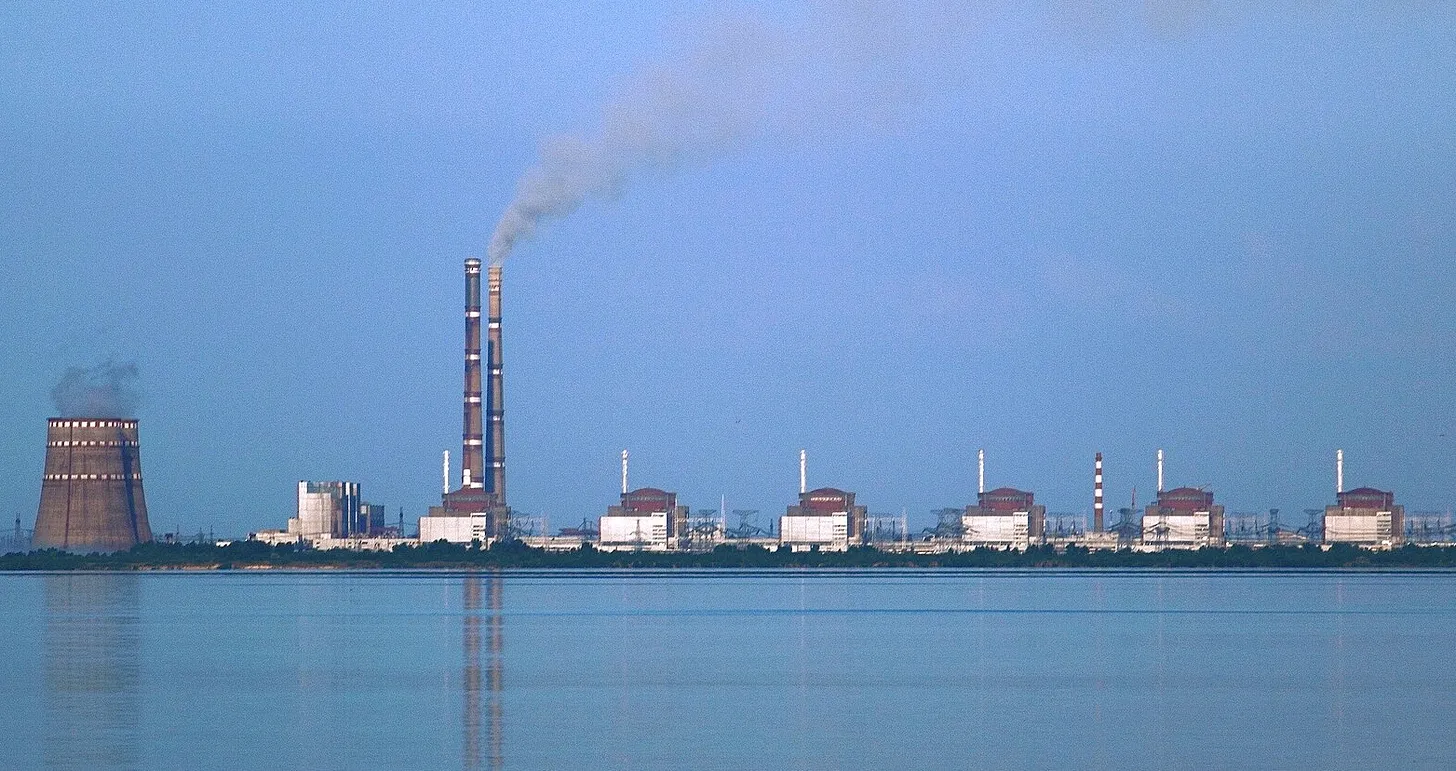
While militaries have long targeted electric infrastructure, the Ukraine-Russia war marks a turning point. More than any conflict in history, this war has been about electricity. In the 45 months since Russia invaded Ukraine, the two sides have launched an unprecedented number of attacks on each other’s electric grids. And now, under the terms of a proposed peace deal put forward by the Trump administration, Russia could get half of the electricity generated from the Zaporizhzhia Nuclear Power Plant — the world’s sixth-largest nuclear power station — as part of the spoils of the war.
Never before has a functioning power plant, much less a massive nuclear power plant, been part of a peace settlement. Here’s a close look at the electricity war, with a special focus on Zaporizhzhia.